
Most product pages are still built to answer a question buyers stopped asking a long time ago: what does this look like?
A photo answers that. A 360 spin answers that a little better. But for any product where the purchase decision depends on more than appearance and information like fit, scale, clearance, configuration, or how something occupies real physical space actually matters... "what does it look like" was never the real question. The real question is spatial: how does this exist in my world?
Most e-commerce experiences are still experimenting on how to answer a question that is natively physical in a digital environment, and it's the reason high-consideration categories keep underperforming online relative to how much research actually happens there.
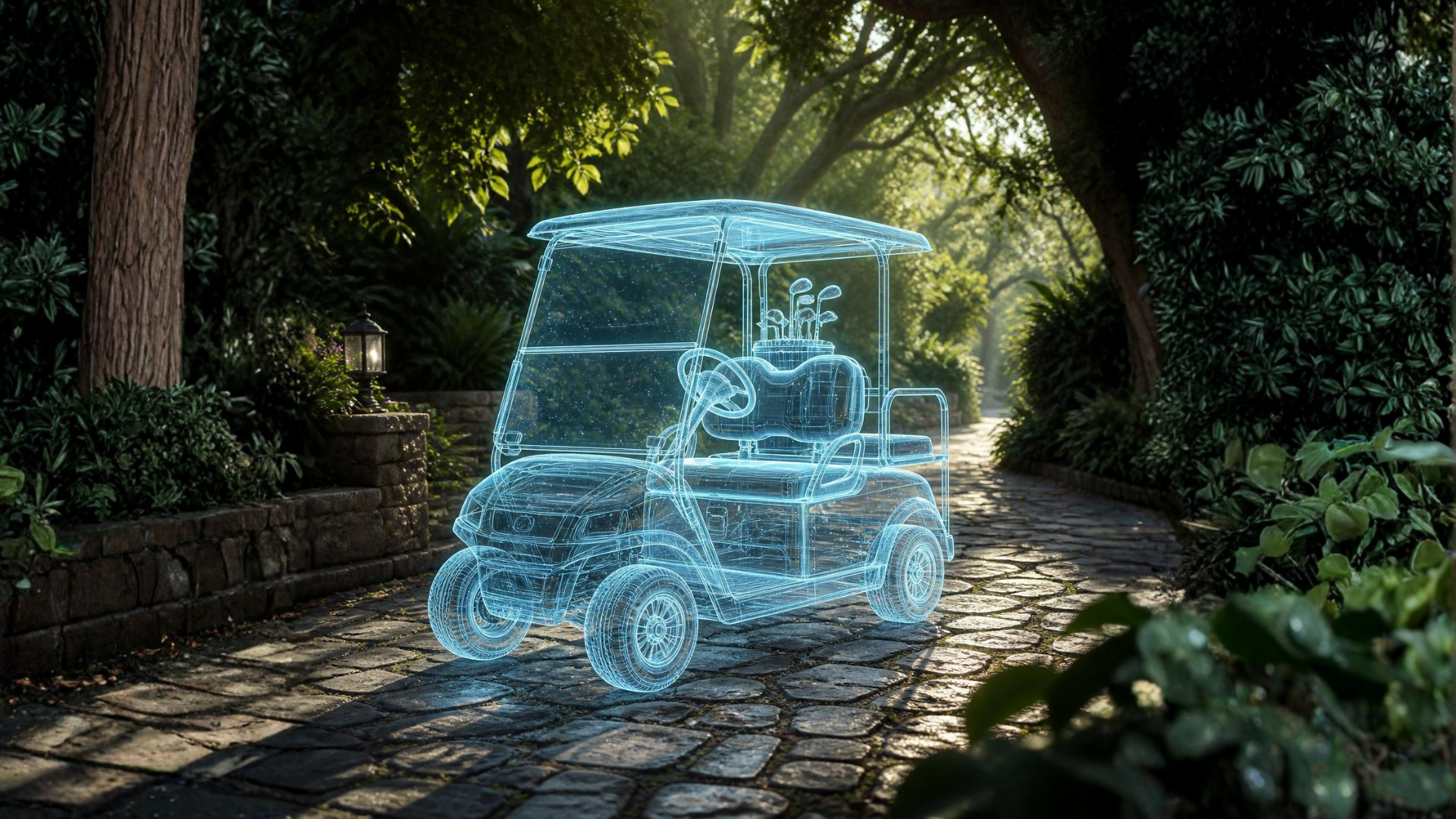
What spatial intelligence actually means
Spatial intelligence is the buyer's ability to understand a product's physical relationships such as its scale, proportions, clearances, how its parts move or fit together, and how it will sit next to the things they already own, all without physically touching it. It's the mental work a good salesperson used to do for a customer standing on a showroom floor: here's how that looks next to your truck, here's how much room that takes up, here's how it moves when you adjust it.
Online, most product pages don't do that work. They show the product from a few fixed angles and leave the spatial reasoning to the buyer's imagination.
Why this is a data problem, not just a UX problem
Here's what most brands miss: spatial intelligence isn't only about giving buyers a better way to evaluate a product. It's about what you learn when they do.
When a buyer can rotate, configure, and interact with an accurate 3D model of your product, every interaction is a signal. What they rotate to first. How long they linger on a specific angle or component. Which configuration paths they explore and which they abandon. That's behavior data that doesn't exist in a flat image gallery, because there's nothing for the buyer to do other than scroll through it.
Brands sitting on this data are looking at buyer intent in a resolution their competitors literally cannot see. They know which features actually drive consideration, not which ones the marketing team assumed would. That's a fundamentally different starting point for every downstream decision including product page design, ad creative, even physical product development.
What buyers are actually looking for
Across high-consideration categories, the pattern is consistent. Buyers researching online before a major purchase are looking for:
-
Scale and fit in their real context. Not "how big is it" in isolation, but how it fits into the space, vehicle, or use case they already have in mind.
-
How components move, adjust, or interact. Buyers want to see hinges, mechanisms, and configurations behave the way they will in real use.
-
Configuration accuracy they can trust. If a buyer builds their exact product, they need confidence that what they see is what will show up. Spatial accuracy is what makes that promise credible.
-
The freedom to explore at their own pace, without a salesperson's script. This is arguably the most underrated part. In-person, buyers get real spatial answers to their questions from a person. Online, they need the equivalent without ever having to ask.
If your product page is still optimized around "what does this look like," you're solving a problem your buyers stopped having once they learned to expect more from digital experiences elsewhere. The brands winning high-consideration categories online right now aren't the ones with the best photography. They're the ones who gave buyers spatial intelligence, the ability to genuinely understand a product in physical terms, and then used what buyers did with that understanding to know them better than they know themselves.
Curious what spatial behavior data would actually tell you about your own buyers? That's the conversation we have with every brand we work with. Join the discussion.