
Palm Beach International Boat Show just wrapped. Brands spent six figures on booths, flights, and floor models. Meanwhile, the buyers who matter most never walked the docks. They were cozy at home in another state, configuring boats online at 11 PM.
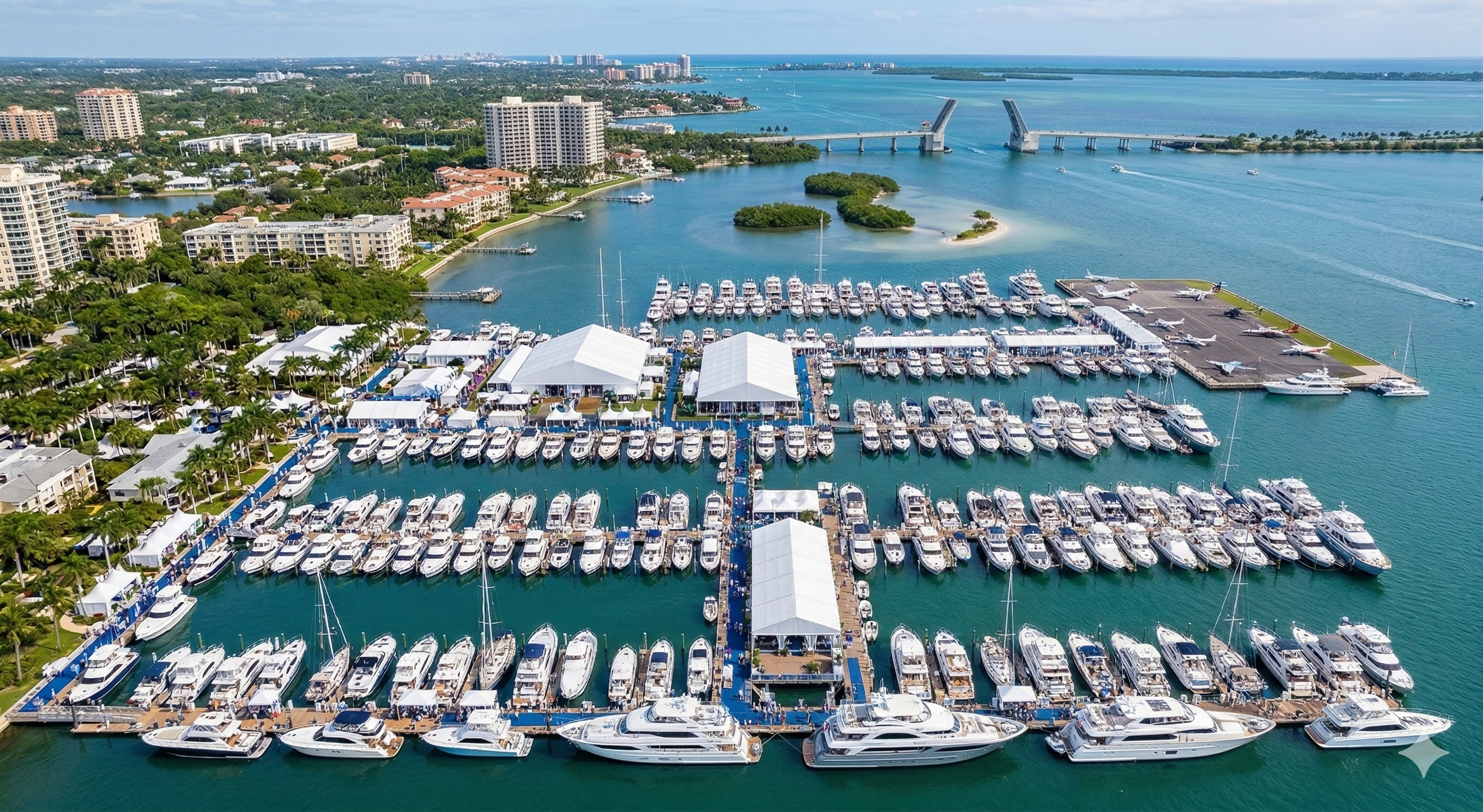
Let's say the quiet part out loud: boat shows are tradition masquerading as strategy. They're spectacle. They're networking. They're important for dealer relationships and press. But if you're a CMO being asked to justify ROI on a $200K boat show presence versus a year-round digital showroom that tracks every configuration, every hesitation, every add-to-cart on a $95K center console the math doesn't even come close. Palm Beach International just wrapped. Miami is done. The industry spent the first quarter doing what it's always done. And while brands were setting up booths, their actual buyers were at home on a Tuesday night, rotating a 3D model of a boat they'll never see in person before they wire the deposit.
The boat show model made perfect sense when it was invented. Buyers needed to see the product. They needed to walk the deck, open the livewell, feel the helm. Brands needed a forcing function to launch new models. Dealers needed somewhere to write orders. But that forcing function is now a bottleneck.
Because the buyer has changed. The modern boat buyer, especially the one spending $80K to $400K on a center console or bay boat, does not make purchasing decisions standing on a show floor surrounded by a hundred other brands. They make decisions alone. Late at night. On their phone. In private. They configure the boat six different ways before they ever fill out a lead form. They compare gelcoat colors. They add a trolling motor, remove it, add it back. They send the link to their spouse. They save it and come back three days later. That behavior is invisible at a boat show. But in a digital showroom, it's everything.
A boat show gets you four days of traffic, most of it unqualified. A digital showroom gets you 12 months of high-intent behavior data. It tells you which models get configured most. Which options create hesitation. Which price points trigger drop-off. It tells you that buyers in Texas care about shallow-water anchors and buyers in Florida don't. It tells you someone in Michigan just spent 11 minutes configuring a $140K Yellowfin and added their phone number. You can't get that standing next to a hull under a tent.
And yet the industry keeps allocating budget like it's 2004. Six-figure booth spaces. Freight costs to move a 28-footer across the country. Hotels, flights, staff time, floor models that sit in a warehouse 50 weeks a year.
What if that same budget went into a 3D configurator that ran year-round, tracked buyer intent, fed your CRM, and actually closed deals in markets you'd never visit? This isn’t about replacing boat shows. It’s about putting them in their place.
Let's discuss what your digital showroom could look like. We’ll walk you through how leading marine brands are using 3D configurators to capture intent, shorten sales cycles, and convert buyers before they ever step on a dock.